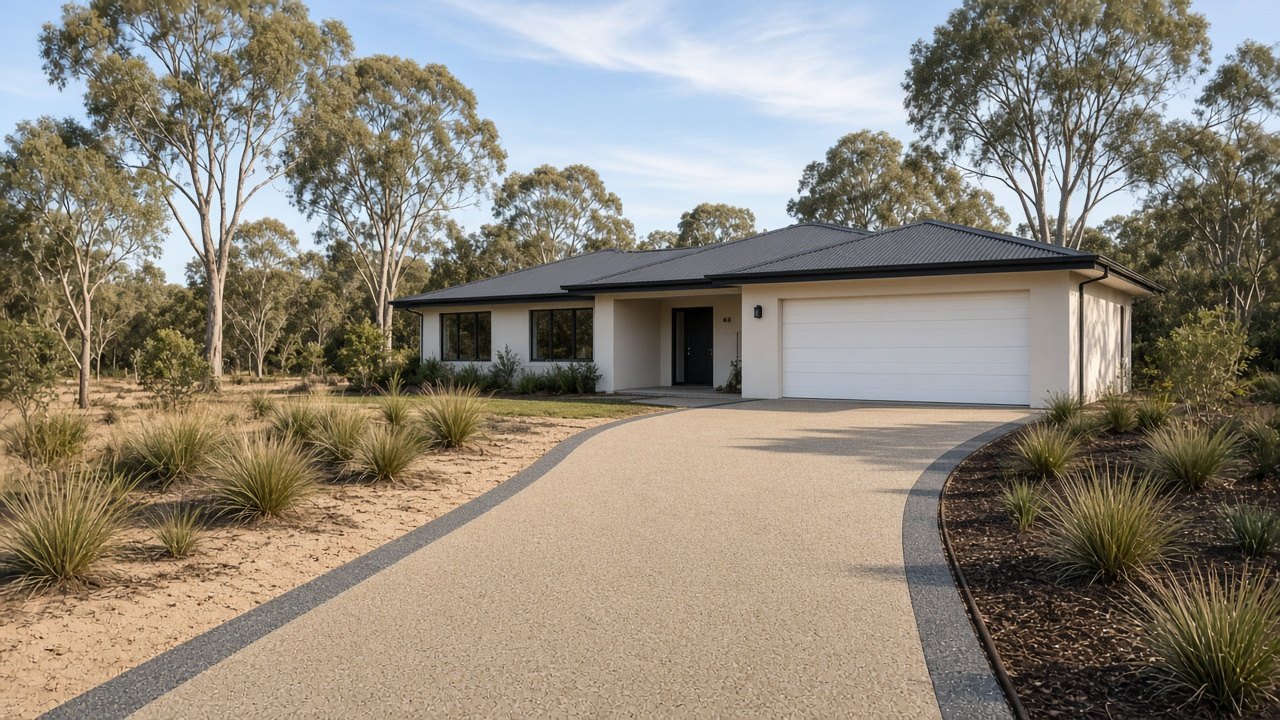
Building a concrete driveway on Langwarrin sand and clay
Langwarrin's ground changes from deep sand to sticky clay within a few streets. Here is how that affects a concrete driveway and what to ask before work starts.
Email: info@langwarrinconcreters.com.au
Deep sand
Clean sand drains quickly and is stable when confined, but it shifts when loose and washes away under concentrated water. Driveways on sand need firm compaction, a crushed rock base, and edges that cannot be undermined. Downpipes and runoff must be directed away from slab edges.
Clay pockets
Where clay is present, it swells when wet and shrinks when dry. Soft or wet clay is dug out and replaced with compacted rock, and the slab is reinforced and jointed to handle movement.
Sand over clay
Some blocks have sand sitting on clay. Water soaks through the sand and pools on the clay, softening the ground beneath the slab. Good falls, drains and sometimes subsoil drainage prevent this.
Fill and old foundations
Older blocks may contain fill or rubble from earlier buildings. It must be removed or compacted before the base is built.
Thickness and steel
Slab thickness and reinforcement should suit the heaviest vehicle: caravans, boats, floats and trucks are common in Langwarrin.
Joints and edges
Planned saw cuts control cracking. Thickened or protected edges resist scour on sandy ground.
Drainage
Falls should take water to pits, gardens or the street, never toward the house or garage.
Questions to ask a concreter
Will you dig a test hole? How deep will you excavate? What base and steel will you use? Where will joints go? How will water drain? Who handles the crossover permit?
Chat with a Langwarrin concreter
Inspections and detailed written quotes cost nothing across Langwarrin 3910, Frankston, Casey and the Peninsula. We skip online rates because sand, clay and access vary on every property.